
Our New Flock Conducts an Unintentional Pelleted Feed Test
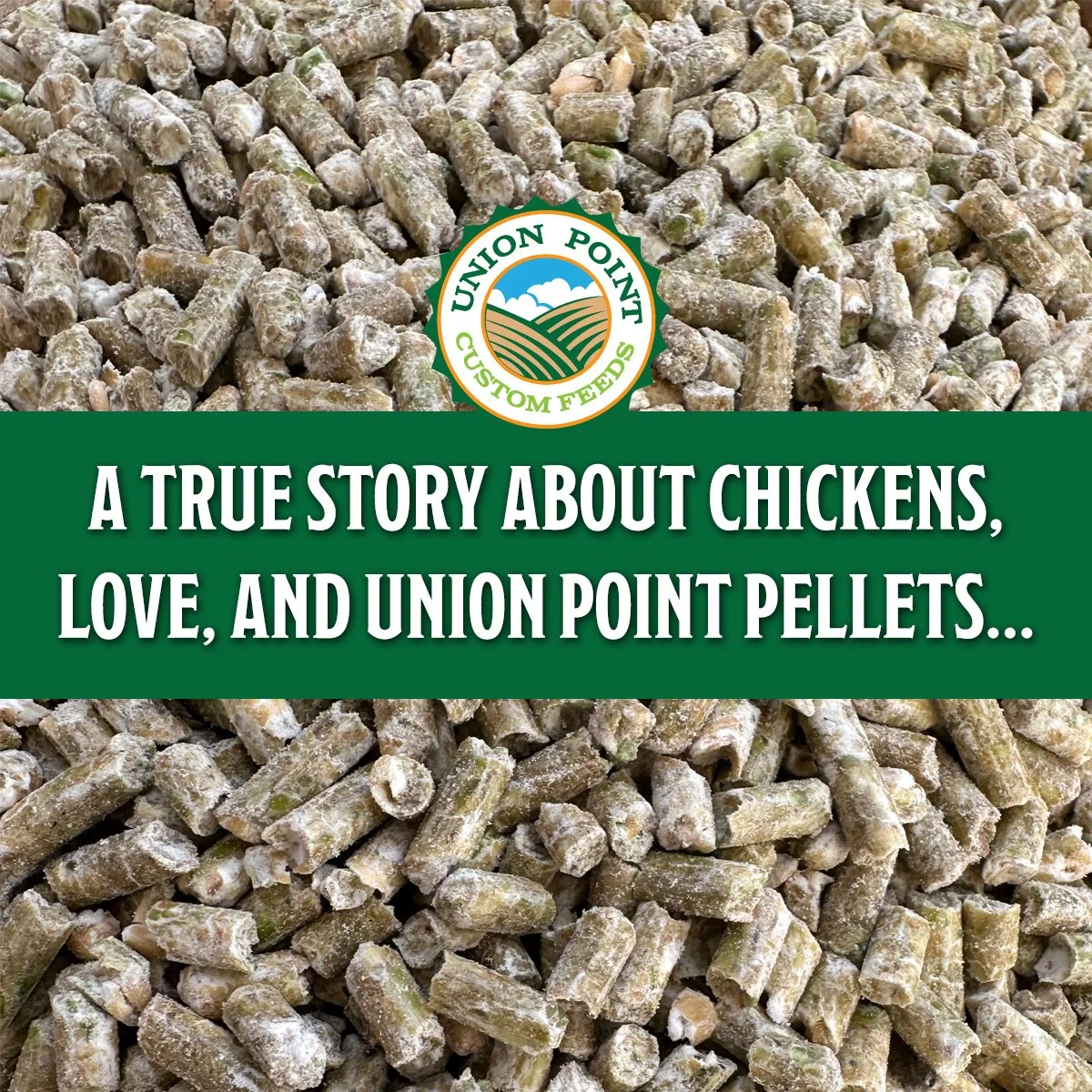
“These chickens will not eat pellets. Never have. Never will.”
That was the gist of the warning we received when we recently took in a flock of 20 laying hens.
The hens, a mix of home-hatched varieties, had been fed a combination of scraps and a bargain feed from a farm supply store. They had done “fine.”
If you have chickens, you know that bringing in a full-grown flock requires careful mitigation. For us, that meant two things.
First: biosecurity. Although we had no reason to suspect this flock posed a risk—and we have no plans to integrate them with our existing batch of old ladies—we followed strict quarantine protocols.
Second: nutrition. We weren’t willing to continue feeding a bargain ration. So we offered the new girls Union Point’s Cold-Pressed Pelleted Layer with Pumpkin. The flock appeared healthy when we took them, but given their previous diet of feed with just 16% protein, it was unlikely they’d consistently received the protein they needed. The Union Point feed has 18% protein, so our pellets would help close that gap. Still, we kept hearing the former owner’s words in our heads: “These chickens will not eat pellets.”
To be clear, we hear that claim often. After trying our feed, it’s usually followed by a revised report:
“These chickens will ONLY eat Union Point’s pelleted feed!”
Typically, we recommend a slow transition—mixing the original feed with Union Point pellets to allow birds time to adjust. In this case, we knew we were taking a chance by going cold turkey. It was possible the hens would refuse the pellets.
So, we put the Union Point pellets out… and waited. We didn’t have to. The hens dove right in, gobbling them up with such delight that it made us chuckle.
If you have chickens, you know they dislike change—especially when it involves their feed. But apparently, that rule doesn’t apply to our pellets, which are cold-pressed with pumpkin and enriched with vitamins, marigold, and paprika and other botanicals.
Fast forward one month.
Each hen is thriving. Feathers are glossier. Eyes are brighter. The barn is filled with happier chatter. Best of all, they’re laying significantly more eggs than they did for their previous owner.
This accidental experiment reinforced everything we teach about pelleted feeds versus traditional loose grains. It isn’t about the form—it’s about the quality.
When pellets are fresh, thoughtfully formulated, and made with ingredients birds genuinely enjoy, chickens eat them enthusiastically. Many commercial pelleted feeds are dry, dusty, and heavy on filler. Ours use the most delicious and digestible proteins, brewer’s yeast, kelp, vitamins and botanical additives. Then we cold-press them into pellets with pumpkin, enriched with vitamins, marigold, and paprika.
Want to learn more about why we love pellets? Read more on our blog, shop our online collection, or contact us for larger or contact us for larger orders. Still prefer the beauty of loose grains? We get it. Look for our layer with pellets, grains and seeds, or add a touch of our Sustainable Scratch to your routine. (Sustainable Scratch is a treat and shouldn’t be more than 10% of a hen’s diet.)